50K followers on Twitter

python

Today, Bill Warner became the 50,000th follower of Liturgy on Twitter. And if you understand how twitter works: @Liturgy is included in nearly a thousand lists!

I don’t know if there is a “typical” follower of @Liturgy, Bill has had nearly four decades of experience in the computer industry, with the last two decades as a CEO. His service to the community include board directorships in the Association for Corporate Growth, Leukemia and Lymphoma Society, Cooperación Ortopédica Americano Nicaragüense and the Triangle Community Foundation’s Entrepreneurial Partnership. Liturgy, this site and blog, the twitter site, and the facebook page, are all about making connections between positive, healthy, intelligent spirituality and the various ordinary and extra-ordinary lives we all lead. I was moved and encouraged by a recent comment in the good discussion on the value of the NRSV:

I enjoy your blog immensely. I only started reading it a few months ago, but it has become one of those blogs where every article is a must-read. For a non-liturgical Protestant seeking more liturgical worship, your blog has been a wonderful find. Thank you for providing this excellent resource.

Thanks to all of you for your support and encouragement.

Is this NZ’s most visited Christian site?

Week starting February 14

2

Reflections based on the collect

6th Sunday in Ordinary Time February 14 reflection from the collect/opening prayer
6th Sunday after the Epiphany February 14 reflection from the collect/opening prayer (TEC BCP USA)

Most using the Revised Common Lectionary will be celebrating Transfiguration Sunday this Sunday (the Sunday before Lent), with the Gospel reading as Luke 9:28-36, (37-43). The Roman Catholic Three Year Cycle, the source of the Revised Common Lectionary has the Transfiguration always as the Second Sunday in Lent. New Zealand Anglicans have always been offered the Transfiguration story or the RCL Gospel on the Second Sunday in Lent, and not the Transfiguration as even an option on this Sunday. There is no explanation in our lectionary. This year, unlike previous years (and again with no explanation of the change), no alternatives are offered on the Second Sunday in Lent. We are only offered the Transfiguration.

It is, of course, also Valentine’s Day

During the week:

Shrove Tuesday – the Tuesday prior to Lent (Tuesday Feb 16 2010)
Ash Wednesday – A Service for the Beginning of Lent
A few simple suggestion during Lent
What is Lent – especially translating it to the Southern Hemisphere

“Alleluia” is not used during Lent. If it needs to be referred to, it is called the “A word” (or maybe the “H word” :-) )

The Gloria is not used in the Eucharist during Lent.


For communities that follow a catechumenal process in which Lent is central:
Lenten preparation (catechumenate)
receiving the Lord’s Prayer (catechumenate)
receiving the creed
(catechumenate)
enrolment for baptism (catechumenate)

Please add any comments, suggestions, hymns, prayers, reflections in the comments section.

St Anthony’s monastery

I first read about the Australian Fr Lazarus, living in the cave of St Anthony, in the book Desert Father: In the Desert with Saint Anthony. I wasn’t sure if Fr Lazarus actually was a useful literary construct rather than an actual person until I watched the BBC series of Fr Peter Owen-Jones Extreme Pilgrim where he spends time with Fr Lazarus and we see around St Anthony’s monastery:

The monk mentioned at the end of the above clip is Fr Lazarus.

Now I fell over this youtube video of archaeological and restoration work at this ancient monastery, at one of the sources of Christian monasticism. Fr Maximous el-Antony describes the work and the possibility of discovering St Anthony’s tomb:

Anglican Covenant – strength of weak ties

Bible Alone

It continues to intrigue me that those who hold to a Bible-Alone, sola scriptura position regularly continue to clamour in favour of the proposed Anglican Covenant. This more protestant, “reformed” end of the Anglican spectrum on the one hand claims the Bible Alone is totally sufficient for all our Christian needs, that the Bible is totally self-explanatory, and that the Bible does not need to be supplemented by any other documents. Yet on the other hand: these same people feel that Anglicanism cannot survive without the Anglican Covenant. Ie. the Bible alone is not sufficient. Make up your mind people: is the Bible alone sufficient or isn’t it?!

Completing the Reformation

Some pro-Anglican-Covenant people speak about the need to “complete the Reformation”. Certainly, many at the Reformation created confessional denominations increasingly dividing over disagreements over interpretations of their lists of beliefs. The Anglican Covenant will either include everyone currently Anglican (and so will alter nothing, have only delayed discussion about the real issue, and wasted jet-engine fuel). Or it will complete the Reformation’s tendency towards ever-increasing fragmentation by splintering the frail bonds that bind Anglicans together.

The Anglican Communion and the strength of weak ties

Without using theological-babble (or “Rowanspeak”) it is very hard to ascertain what those who are pro-the Covenant concretely want and expect from a “Communion”. Certainly we would hope a communicant anywhere is a communicant everywhere in the Communion. Even that principle has been stretched to breaking with some provinces communicating all the baptised, some needing a rite of “admission to communion” at an age of “understanding”, and some needing episcopal confirmation before receiving communion. I am sure that toddlers from the first option may have difficulty receiving communion in provinces with the last option. Another principle is the mutual recognition of ordination, so that clergy in one province can function as clergy in another province. That principle has long been broken with women clergy, and male clergy ordained by women bishops, from one province unable to function as clergy in other provinces. Attitudes to divorce and remarriage vary from province to province, affecting communicant status and acceptability of remarried clergy. All this will not change one iota should the Anglican Covenant be accepted.

Sociologist Mark Granovetter, in the highly influential 1973 paper on social networking “The Strength of Weak Ties”, argues our close friends will be quite similar to us. Acquaintances differ more from us and will have their own networks of close friends. We have strong ties to our friends, and weak ties to acquaintances. Granovetter argues persuasively for the value of having both strong and weak ties – they have different functions, enhancing both our flourishing and theirs.

Strong ties (friends) are like an Anglican province. Weak ties (acquaintances) are like our inter-provincial ties across the Anglican Communion. Many who are pro-Covenant appear unable to articulate a difference between a diocese, a province, and a communion – these appear to be seeking that the communion function essentially in the way that most of us understand a diocese to function (or possibly a province).

A previous post: the Anglican Covenant will not do what it is meant to do

A helpful site for deeper reflection is the World Anglicanism Forum run by Bruce Kaye, an Anglican theologian, Foundation editor of the Journal of Anglican Studies. Currently a Visiting Research Fellow in History at the University of New South Wales and a Professorial Associate in Theology at Charles Sturt University.

Preparing for Lent

Currently one of the most visited page on this site is “Ash Wednesday”. People are starting to seriously prepare for Lent. Please add in the comments section below your ideas, resources, websites, hymns, prayers – anything which will help us all, together, in our preparations for Lent. Here are some links to start off:

Shrove Tuesday – the Tuesday prior to Lent (Tuesday Feb 16 2010)

Ash Wednesday – A Service for the Beginning of Lent

A few simple suggestion during Lent

What is Lent – especially translating it to the Southern Hemisphere

Palm Sunday/ Passion Sunday

Maundy Thursday (Holy Thursday)

Good Friday

For communities that follow a catechumenal process in which Lent is central:

Lenten preparation (catechumenate)
receiving the Lord’s Prayer (catechumenate)
receiving the creed (catechumenate)
enrolment for baptism (catechumenate)

NRSV New Revised Standard Version

I intend to post reviews, from time to time, of different study bibles. Prior to commencing that series, I think it helpful if I write a little on the translation I would recommend if you do not read Hebrew and Greek. I  recommend the New Revised Standard Version (NRSV), with the extra comment that, those not agile in the original biblical languages need to keep one eye on the footnotes provided.

History

William Tyndale’s New Testament translation of 1525 and the King James Bible set a standard of biblical English leading to a “Revised Version” in the late nineteenth century. This led to the “American Standard Version (ASV – 1901)” of which the “Revised Standard Version (RSV)” was the authorised revision. This last work was completely revised by the Division of Christian Education of the National Council of Churches as well as Jewish representation to form the NRSV (1989).

The NRSV was able to take advantage of scholarly developments since the RSV including the availablility of  the Dead Sea Scrolls and other manuscript discoveries.

Translation principles

Linguistically the NRSV stands intentionally in the Tyndale-King James tradition. The Hebrew text is primarily the Biblia Hebraica Stuttgartensia with reference to the Dead Sea Scrolls and the Septuagint. The Apocrypha/Deuterocanonical texts are from the Septuagint with reference to the Vulgate. The New Testament is a translation of the Novum Testamentum Graece 27th edition. The principle of translation is formal equivalence (as much as possible “word for word” rather than dynamic equivalence – “idea for idea”). Where the original clearly is intended to refer to both genders the translation has attempted to do this as smoothly as possible, clearly noting this in the footnotes. God retains the masculine pronoun. No attempt is made to alter masculine concepts of God such as “Lord” etc. In fact the Divine Tetragrammaton is translated as “LORD”. The archaic second person familiar forms (”thee”, “thou”), often confused as actually being polite forms, have been standardised to “you”, “your” etc. Many translations betray their theological presuppositions in soteriology (theories of salvation) or in hiding apparent biblical inconsistencies. NRSV can be trusted not to do that.

There is an edition following the Protestant canon, another including the Apocryphal/Deuterocanonical Books; there is a Catholic Edition containing the First Testament books in the order of the Vulgate, and an anglicized edition which alters the text slightly to fit to British spelling and grammar. Other translations have been assiduous in marketing their product with a large variety of different presentations (teenage bibles, women’s bibles, men’s bibles, 12 step bibles, etc). NRSV has been notably weak in the variety of options available. Thankfully that is slowly improving.

The Episcopal Church and many Anglican provinces have approved the NRSV for worship. Common Worship (CofE) uses it as a standard. It is approved for Roman Catholic use and is the primary translation used in Catechism of the Catholic Church (the other being the RSV).

Conclusion

If you are looking for one translation and you are not confident in the biblical languages, the New Revised Standard Version is the one I would recommend.

Resources

Please remember this site has a collection of the best free, online resources to enhance your study of the scriptures. Beyond this website there is also:

The NRSV online

The NRSV online (an alternative site)

Search the NRSV online

Concise Concordance to NRSV online

Internet depression & other issues

The dark side of the internet

As with any powerful gift (eg. money, sex, power), the internet can be used for great good and for great evil. From time to time I receive stories of marriage failures attributed to the internet, cyber-bullying, cyber-stalking. The internet can be a tragic time-waster. Anonymous trolls can make comments online that they would never dare to make if their identity was known, or face to face – as they roam around the web solely to start fights. The internet can be damagingly addictive. It is an easy place for intellectual property theft. The list can go on.

A new study by UK psychologists has confirmed what probably most of us realise – there is a link between internet abuse and depression. It is unclear whether internet abuse leads to depression, or whether depressed people are more likely to misuse the internet.

What are your suggestions for keeping your internet use healthy, accountable, ethical? What do you see as significant negative issues in the use of the internet? I know many will appreciate collective wisdom, some guidelines, even suggested rules for oneself.

atheist cats

The Dog Illusion

atheist_cat_demote_by_marsmar

Lolcats are an internet meme. The antitheist Richard Dawkins introduced the word “meme” in The Selfish Gene (1976) from the Greek μιμητισμός (something imitated). I hope you’ve seen the Dog-God video. See also “do dogs go to heaven?”.

funny-pictures-cat-greets-dog-at-door

Any other (humorous) images, thoughts, or video clips about cats (dogs) spirituality etc. – add them or just give the URL in the comments below.

per saltum ordination

Direct ordination or not?

Priesthood is normally understood as church-facing/Christian-community-facing leadership. Priests gather and lead the Christian community gathering (breathing in).

Priests in the Church are called to build up Christ’s congregation,
to strengthen the baptised…
to be pastors…
to declare forgiveness through Jesus Christ,
to baptise,
to preside at the Eucharist,
to administer Christ’s holy sacraments.
NZ Anglican ordinal, Prayer Book pg 901

Deacons, on the other hand, are ordained to world-facing, sacrificial leadership. They lead the Christian community dispersed in service in the world (breathing out).

Deacons in the Church of God serve in the name of Christ,
and so remind the whole Church
that serving others is essential to all ministry.
NZ Anglican ordinal, Prayer Book pg 891

Currently, to be ordained a priest (church-facing leadership) you have to be ordained a deacon first (world-facing leadership). This is termed “sequential ordination”. If God is calling you to church-facing leadership rather than world-facing leadership – tough! So most people perceive deacons as apprentice priests. And those God calls to the diaconate (and not to priesthood) are regularly seen as people who haven’t made the grade and are stuck in their apprenticeship.

In the Latin Rite of Roman Catholicism (the majority of Roman Catholics), “permanent deacons” can marry (prior to ordination) and then regularly do priest-like ministry (church-facing, rather than world-facing) because of a shortage of celibate priests. [Other Roman Catholic rites allow for married priests and have a stronger tradition of a clearly differentiated diaconate]

(Unfortunately) I have regularly seen people who once said strongly they were called to the diaconate, after a period decide they were called to priesthood after all. I can only quickly think of one person, I know personally, called to the diaconate who has stayed a deacon.

[I am not in this post going to bring bishops into the discussion. There is an ongoing dispute about the nature of bishops:
Are bishops priests to whom we have delegated the authority to ordain (the position of St Jerome)?
Or are priests delegates of the bishop in the local congregation (so that when the bishop is present the priest ought not to function in that ministry - the position of Theodore of Mopsuestia)?]

As I wrote above, currently to become a priest one must be a deacon first. A different approach, “direct ordination” or “per saltum ordination” (literally “by a leap”) is the understanding that you be ordained directly to the order to which God calls you. If you are to be a deacon, you are ordained a deacon (the current practice); if you are to be a priest, you would be ordained a priest (not a deacon first). Some scholars argue that in the early church all ordinations were per saltum (see Hallenbeck ed. Orders of Ministry). St Ambrose’s direct ordination to the episcopate is probably the most celebrated story.

There seems a surprising amount of emotional energy invested in maintaining the status quo. We have probably all met bishops proudly (sic!) proclaiming “I am still a deacon!” Episcopal Cafe has presented two interesting posts about the emotional dimension against per saltum ordination (part 1; part 2).There is also a discussion about this in the discussion area of Sarah Dylan Breuer’s facebook page. Some theologians hold that per saltum ordinations would be invalid. What is your position? And in the comments area – why?

There will be a sequel to this post in the near future.

Week starting February 7

01

Click on the following links to get reflections
5th Sunday in Ordinary Time February 7 reflection from the collect/opening prayer
5th Sunday of Epiphany February 7 reflection from the collect/opening prayer (CofE Common Worship)

You can share any comments as well as any resources, ideas, sermon-starters, children’s activities, hymns, prayers, etc. in the comments section below.

be part of love – “Up in the Air”

Up in the Air 2009 movie – some thoughts

UpInTheAir_posterCentral to this film (spoilers warning) is a scene with Jim Miller (Danny McBride) in a Sunday school classroom reading the classic The Velveteen Rabbit. The story of The Velveteen Rabbit is a story of a toy rabbit who becomes real by being loved – loved so much that his fur is rubbed off in the process.

In the scene I mention, Jim explains his thoughts about what his life is going to be like: house, children, jobs, losing his hair, and then dying. He wonders what the point of life is. IMO it is a key moment in the movie.

The film focuses on Ryan Bingham (George Clooney) who lives out of a suitcase, employed to travel around the country firing people. We see the reaction of people being “let go”. With a few exceptions of well-known actors, the scenes of people’s reactions are not with actors, but the reaction of actual people recently laid off. (And here’s an important movie-going rule: always stay through the credits. In one case a thriller’s conclusion changed completely after the credits. Often there is a humorous bit, or the hint of a sequel. This time there is a significant song).

Ryan Bingham is a commitment-phobe:

Ryan: How much does your life weigh? Imagine for a second that you’re carrying a backpack. … I want you to fill it with people. Start with casual acquaintances, friends of friends, folks around the office… and then you move into the people you trust with your most intimate secrets. Your brothers, your sisters, your children, your parents and finally your husband, your wife, your boyfriend, your girlfriend. You get them into that backpack, feel the weight of that bag. Make no mistake your relationships are the heaviest components in your life. All those negotiations and arguments and secrets, the compromises. The slower we move the faster we die. Make no mistake, moving is living. Some animals were meant to carry each other to live symbiotically over a lifetime. Star crossed lovers, monogamous swans. We are not swans. We are sharks.

Ryan’s one-night stands give way to a developing relationship with what he perceives to be a female version of himself, Alex (Vera Farmiga). There is an interesting reflection here on sex as sacrament. Some people may think that sex does not connect us as people – but here there is an argument that we can let that wall slip. Sex with Alex is where Ryan’s walls begin to crumble.

Ryan: I thought I was a part of your life.
Alex: I thought we signed up for the same thing… I thought our relationship was perfectly clear. You are an escape. You’re a break from our normal lives. You’re a parenthesis.
Ryan: I’m a parenthesis?

There is a memorable scene where Ryan is looking at the myriad of flight options on an airport screen. It is a metaphor of the commitment-phobe. In our culture in the past we used to tell lots of people we loved them, but only had sex with someone significant. Now our contemporary culture has reversed this totally to having sex with lots of people – and telling someone we love them is regarded as very significant (and saying “I love you” during the climax of sex doesn’t count!) Our culture has shifted, without much reflection, from focusing on the positive of marriage, allowing one to now “have and to hold”, to its negative – the realisation that in marriage one ends up “forsaking all others.” It is little wonder that divorce is so prevalent. With compassion towards those who have genuinely found their commitment impossible to maintain, one wonders at Christians, even clergy, moving through their third or more marriages. Anyway, when it comes to sex, Christianity has a pretty bad track record currently – riddled with scandals, obsessing about sex as a primary issue, and generally giving a negative impression about sex (why is the term “living in sin” associated with sex, and not, say, anger, or video piracy,…). It is understandable Christians cannot be heard about a positive attitude to sex. Maybe Christians need to be silent about sex for a generation. And after that slowly begin talking about sex again, but solely in a positive, encouraging way,… starting with the Song of Solomon. Visually illustrated…

At the start of the film Natalie (Anna Kendrick) looked like a younger version of Ryan. Turns out she is not:

Natalie: Don’t you think it’s worth giving it a chance?
Ryan: A chance to what?
Natalie: A chance to something real.
Ryan: You’re definition of real evolves as you get older.
Natalie: Can you stop being so condescending for one second or is that one of your principles of your bullshit philosophy? The isolation? Is that supposed to be charming?
Ryan: No, it’s simply a life choice.
Natalie: It’s a cocoon of self banishment.

There is a bit of a transformation for Ryan as he allows himself to make some real connections – but…

Relationships are messy. Love in real life isn’t neat, tidy, well-organised, in the way that Ryan’s flying life appears. Love is much more like the story of The Velveteen Rabbit. It wears our fur off. It also makes us real.

How Jewish is your Jesus?

Last week a flight from New York to Louisville was diverted to Philadelphia when the flight crew saw a 17-year-old Orthodox Jew wearing a pair of tefillin (phylacteries) while praying. The flight attendant asked for, and received an explanation. Nonetheless, fearing a terrorist attack, police, officials from the FBI, and Transportation Security Administration stormed the plane, at gunpoint ordered everyone to put their hands up, and handcuffed the lad.

Jesus, it seems had tassels on the four corners of his outer robe (Mt. 9:20; 14:36; Mk. 6:56; Lk. 8:44), Jesus most probably wore tefillin (phylacteries) while praying, and almost certainly the Pharisees who disputed with him would have worn them all the time. Is this your image of Jesus? And if not, why not? Do we make Jesus into our own image, forgetting that he would feel pretty much at home in contemporary Jewish or Eastern Orthodox worship, and might feel a bit out of place in the “non-liturgical” worship that maybe most of those on the plane are used to?

It fascinates me, that as I was looking on the web for an image of Jesus wearing tefillin to add to this post: I could not find a single one {other than this one by (the Jewish) Chagall}. I asked my 46,000 followers on twitter. Not one of them could find an image of Jesus wearing tefillin either. Reinforcing the point of my above paragraph.

And if (as Christians) we don’t recognise the tefillin (phylacteries) from our interest in Jesus (and at least our reading of Matthew’s Gospel), what about our knowledge, respect, and understanding of other great World Faiths, not least the Jewish religion? Jews regularly wear tefillin (phylacteries) on planes flying into New York from Israel. New York is well known for its large, significant Jewish population. Surely knowing about Jewish prayer practice is an essential part of well-educated general knowledge?

In this video, Shmuly Tennenhaus demonstrates how one might pray using tefillin on an aeroplane without frightening ignorant passengers and crew.  As always, beneath good humour is a serious point. Enjoy.

Kippah/zuchetto/yarmulke tip to Seven whole days

Week starting January 31

Candlemas (Russian icon)

Candlemas (Russian icon)

Most on Sunday will be celebrating the 4th Sunday in Ordinary Time January 31 (click that link for a reflection from the collect/opening prayer).

Some will be anticipating Candlemas, the feast of the Presentation of Jesus in the Temple.

You can add your resources and reflections on the readings, feasts, hymns, etc. in with the comments below.

pope urges priests to blog

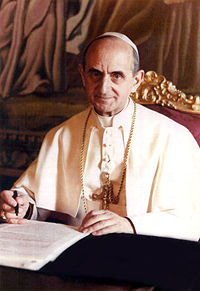
popeThe pope has issued a proclamation challenging priests “to proclaim the Gospel by employing the latest generation of audiovisual resources (images, videos, animated features, blogs, websites) which, alongside traditional means, can open up broad new vistas for dialogue, evangelization and catechesis.”

Internationally there are some Anglican blogging bishops (I try to keep up with these in the links section). Of the 31 bishops in our province, not one blogs as far as I know (the bishop-elect of Dunedin blogs – we shall see if that continues). Of the more than one and a half thousand Anglican priests in this province I’m aware of a couple that blog, and a few more on twitter. The official website of the province has not been updated in more than a year. Maybe there are Roman Catholic blogging bishops and priests in New Zealand. I am not aware of them. There are still parishes and ministry units without even a website – in spite of web-hosting and production being free and easy now, with advice and help provided on this site. Every parish can have a facebook page (and a twitter). Blogging has never been easier using wordpress or blogger. Such things are not, as those in the church often make them appear to be, things that require great planning and debate. These things take less than 10 minutes to set up. Nothing manifests the yawning gap between average young people and average churchgoers more than the unwillingness of most churchgoers to embrace late 20th century communication technology. The church can be so last millennium!

The pope is on youtube (his videos do not appear to be able to be embedded), and has an iPhone and facebook app, pope2you. Let’s urge him to take his own advice and start blogging. If he is reading this: “I’m very happy to swap links with you”. Some suggestions for the name of the papal blog? “Mass communication”? Maybe not “Papal Bull”. (Definitely not “Red Shoe Diaries”!)

SOAP Lectio Divina

For all I know some readers of this post may wonder where I have been living all this time, or maybe that I move in far too small circles! Recently I was reading some comments of a woman who was taking for granted that all her readers knew what the “SOAP” Bible-reading method was. Well I had never heard of it. So I got in touch with her and she explained it stands for:

Scripture – pick your passage, follow a system, use a lectionary
Observation – what particularly touched you in the scripture passage?
Application – how can you apply your observation to your life?
Prayer

Recommendations are that all this be written in a journal – starting each section S, O, A, P
In my correspondence with her I mentioned how it has similarities to the great tradition of Lectio Divina, “Spiritual Reading”. She had never heard of that :-)

Lectio Divina has four movements

Lectio – read the passage
Meditatio – reflect on the passage
Oratio – respond in prayer
Contemplatio – rest in God

Previously I have written some more on Lectio Divina
There is also a good introduction to Lectio Divina here.

One comment I found suggested that the SOAP method started here.
A website for storing your SOAP is here.

A couple of final points: SOAP and Lectio Divina do not replace serious academic study of the scriptures – it prayerfully complements study. IMO the Christian spiritual life flourishes when there is a regular balance and variety of prayer styles: Eucharist, lectio divina, intercession, Daily Office, silent prayer,… There is a danger when only one or few from this list are present to nourish our spiritual life.

Comments below, as well as responding to this post, might include other ideas, websites, and resources.